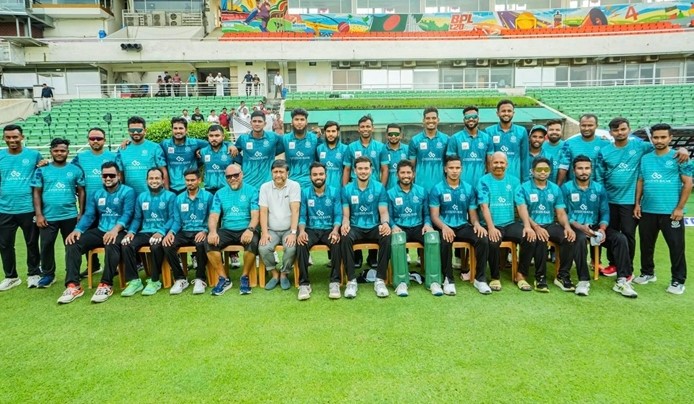
Litton Das shares untold details about Bangladesh missing T20 World Cup
Contents
The Decision That Rocked Bangladesh Cricket
The decision to withdraw Bangladesh from the 2026 T20 World Cup in India remains a defining, albeit painful, moment in the nation’s sporting history. The Bangladesh Cricket Board (BCB) ultimately chose to skip the tournament, citing security concerns that could not be reconciled, despite attempts to shift the venue to Sri Lanka. With Scotland stepping in to fill the void, the cricketing world was left wondering how such a major decision was reached. Now, for the first time, T20 captain Litton Das has broken his silence, offering a raw and unfiltered perspective on the events that transpired behind closed doors.
A Symbolic Consultation
At the heart of the matter were high-level discussions involving key figures such as former Youth and Sports Adviser Dr. Asif Nazrul. While the narrative at the time suggested that the players were central to the decision-making process, Litton Das tells a different story. In an interview with Prothom Alo, the skipper hinted that the meetings were less about gathering player input and more about optics.
“There wasn’t really any question to answer there,” Litton remarked with a wry laugh. “We basically went there to have tea and participate. It felt like it was being shown to the media that the players had been consulted. We were happy to sit in an air-conditioned room and have some tea.” This revelation suggests that the players were largely excluded from meaningful influence, relegated to a passive role while the officials weighed the future of the team.
The Priority Was Always Cricket
Despite the complexity of the bureaucratic process, the players’ stance remained refreshingly simple. When pressed on what their actual desire was regarding the tournament, Litton noted that the answer should have been obvious to the board. “They asked us what we wanted. What else would players want? We said we wanted to play cricket,” he explained. For the athletes, the goal was never to navigate international politics or assess geopolitical risk; it was simply to compete on the world stage.
Questioning the Security Narrative
One of the most contentious points in the debate was the justification of security concerns. Litton Das did not mince words when discussing whether these concerns were truly insurmountable. He drew a direct comparison to the team’s experiences in other volatile regions, pointing out that the team had previously played in Pakistan under heavy security protection. “The response from their side was that there were security issues in that country. We told them that we had already played cricket in Pakistan, where armed guards stood outside our hotel rooms. What could be more serious than that? If we can play cricket in Pakistan, why not in India?”
This comparison highlights a potential disconnect between the administration’s perception of risk and the players’ willingness to adapt to challenging environments to represent their country.
Reflecting on Accountability
Ultimately, Litton stressed that the final call lay squarely with the administrators. As the captain, he felt that there was little the players could do once the authorities had made up their minds. “That was entirely their call. As players, what more could we say?”
The discourse took a sharper turn when reflecting on subsequent comments from Dr. Asif Nazrul, who had suggested that the players failed to push back against the decision to skip the World Cup. Litton, maintaining a cool, humored demeanor, responded to these claims by questioning the validity of such statements from officials no longer in power. “Is he still in that position now?” Litton asked, before adding with a smile, “People can say many things once they’re no longer in office.”
Moving Forward
The legacy of this decision will likely be debated for years to come. For Litton Das and his teammates, it represents a missed opportunity and a moment of frustration. By speaking out, the captain has provided much-needed clarity, proving that while players are the face of the game, they are often the last to be heard when decisions of this magnitude are made. As cricket in Bangladesh evolves, the story of the 2026 T20 World Cup will serve as a poignant reminder of the importance of transparency and the need for officials to genuinely value the voices of those who actually play the game.

Related Articles