Kumar Sangakkara reveals why ECB allowed Jofra Archer to skip Test match for IPL
Contents
The Balancing Act: Archer, ECB, and the IPL
The landscape of professional cricket has shifted significantly, often creating an invisible, yet persistent, tug-of-war between national cricket boards and the lucrative allure of the Indian Premier League (IPL). While the majority of England’s elite cricketers chose to bypass the 2026 franchise season to focus entirely on national team preparations, Jofra Archer emerged as a notable exception. This divergence sparked considerable debate, leading many to wonder exactly how the decision was reached.
Collaborative Strategy Over Conflict
Following a decisive victory against the Mumbai Indians at the Wankhede Stadium—a win that secured a playoff spot for the Rajasthan Royals—head coach Kumar Sangakkara addressed the media. He offered clarity on the situation, emphasizing that the narrative of a conflict between the board and the player was largely inaccurate. Kumar Sangakkara reveals why ECB allowed Jofra Archer to skip Test match for IPL participation, attributing the outcome to a highly communicative and collaborative process.
“I think it’s a collaborative decision from what I know. I don’t want to speak out of turn about things I don’t know with certainty, but I think it was a collaborative decision between the ECB and Jofra,” Sangakkara noted during his post-match press conference.
Workload Management and Long-Term Vision
The rationale behind the decision is rooted in the England and Wales Cricket Board’s (ECB) commitment to Jofra Archer’s long-term health. Given the pacer’s well-documented history of debilitating injuries, the board has implemented a stringent workload management program. The primary objective is to ensure that when Archer returns to the international arena—specifically for the upcoming Test series against New Zealand—he is in prime physical condition.
Sangakkara provided deeper insight into the technical reasons for this arrangement, explaining that the demands of T20 cricket differ vastly from the requirements of the longest format of the game:
- Bowling Volume: Archer needs to build his bowling capacity beyond the four-over limit imposed in T20 matches.
- Gradual Progression: The ECB and the franchise are working in tandem to ensure he reaches his bowling goals safely.
- Strategic Rest: By allowing him to complete his stint with the Royals under a managed program, the board avoids the risk of premature, high-intensity training.
“Talking about his bowling goals, especially in a Test match, it’s very difficult to get your bowling goals up very soon when you are bowling only four overs in a game,” Sangakkara explained. “So he needs time to get that done. I think that was why the ECB was gracious enough to let him stay and understand that he’ll be fine once he gets his bowling goals up, once he leaves the IPL.”
Performance Meets Preparation
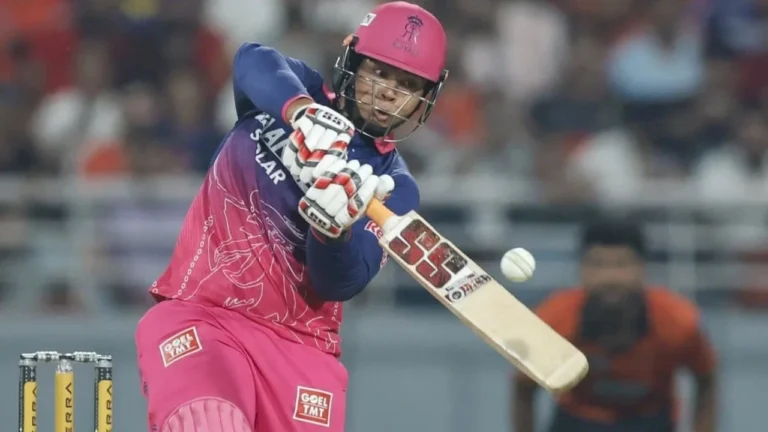
The skepticism surrounding Archer’s participation was quickly silenced by his clinical performance against the Mumbai Indians. The pacer was deservedly named the Player of the Match, delivering a masterclass in both facets of the game. He contributed 32 runs off a mere 15 balls with the bat, followed by a devastating 4-over spell that saw him claim 3 wickets for just 17 runs.
This performance underscores the efficacy of the current management strategy. Both the Rajasthan Royals and the ECB remain aligned in their goal: protecting one of the most exciting talents in the world while ensuring he is ready for the rigors of Test cricket. As the season progresses, the focus will undoubtedly shift from the politics of his schedule to his vital role in England’s future international campaigns.
Ultimately, the arrangement serves as a blueprint for how national boards and franchises can cooperate to protect elite athletes. It is a calculated gamble on quality over quantity, aimed at preserving Archer for the challenges that lie ahead in the white-clad format.

Related Articles