Sanju Samson vs Ruturaj Gaikwad: IPL Captaincy Battle for CSK Leadership
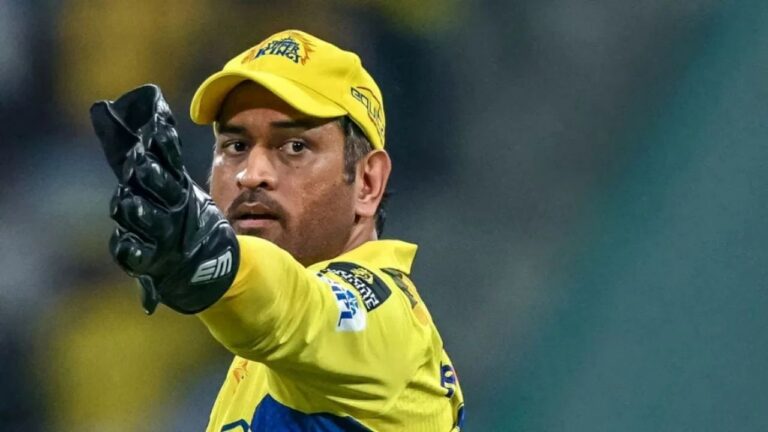
The Chennai Super Kings (CSK) have faced a challenging period in the Indian Premier League (IPL) recently, particularly during their IPL 2026 campaign, which has ignited a significant debate regarding the leadership of Ruturaj Gaikwad. A crucial home defeat to Sunrisers Hyderabad effectively dashed CSK’s playoff aspirations, leaving the franchise and its supporters in a state of introspection. Amidst this struggle, several prominent ex-cricketers have publicly put forward the name of former Rajasthan Royals skipper Sanju Samson as a potential candidate to take over the captaincy for the illustrious Chennai franchise.
Gaikwad’s two-year tenure at the helm has regrettably not seen CSK secure a top-four finish, and concerns have also been raised about his personal batting form, which has experienced a noticeable dip. In stark contrast, Sanju Samson has meticulously built a commendable captaincy resume with the Rajasthan Royals, demonstrating consistency and strategic acumen. As discussions surrounding a possible leadership revamp gain momentum, it becomes imperative to conduct a detailed statistical comparison of these two prominent players, particularly with an eye on the upcoming IPL 2027 season and the critical decisions CSK might face.
Contents
Ruturaj Gaikwad’s CSK Captaincy Record: A Period of Underperformance
Ruturaj Gaikwad assumed the demanding role of CSK captain in 2024, tasked with the unenviable challenge of filling the legendary shoes of MS Dhoni. Across his two full seasons as captain, the statistical returns paint a picture of mediocrity rather than the consistent excellence associated with the Super Kings dynasty. In 32 IPL matches under his leadership, Gaikwad has overseen 14 victories against 18 losses, resulting in a win/loss ratio of just 0.777. Notably, the team has not reached the playoffs under his stewardship, with the 2026 season proving particularly grim. While mathematically still alive, CSK’s playoff hopes now hinge on an improbable confluence of results, a stark departure from their usual dominance.
Beyond team performance, Ruturaj Gaikwad’s individual contributions as captain in the IPL have been modest. He has accumulated 1,026 runs in 32 innings while leading CSK, maintaining an average of 38.00, including one century. However, this respectable average somewhat conceals a significant decline in his form during the 2026 season. In the latest campaign, he managed only 321 runs at an average of 29.18, coupled with a strike rate of 120.68. These figures fall considerably short of the aggressive scoring benchmarks expected in modern T20 cricket, raising questions about the dual pressure of captaincy and batting performance. Expanding to his broader T20 captaincy career, encompassing domestic games, he holds an average of 40.17 across 54 matches, but his 2026 IPL numbers have notably pulled down this overall statistic, indicating a recent struggle.
It is important to acknowledge that Gaikwad has historically performed brilliantly as a pure batter. Interestingly, his non-captaincy IPL numbers are almost identical to his captaincy figures, averaging 39.06 in 52 matches. This suggests that the added responsibility of leadership has not necessarily elevated his batting performance, nor has it significantly hampered it in the long run, except for the recent dip. A closer look reveals a notable disparity in his performance based on venue: as captain, he averages a commanding 59.11 at home, a testament to his comfort in familiar Chepauk conditions. However, this average plummets significantly to 26.11 when playing away from home, highlighting a potential vulnerability under different pressures and environments.
Sanju Samson’s IPL Captaincy Record: Stability and Growth
In contrast to Gaikwad, Sanju Samson has been at the helm of Rajasthan Royals since 2021. While his tenure may not be overflowing with silverware, it has been remarkably more stable and progressive than Gaikwad’s recent run. Across 67 IPL matches as RR captain, Samson boasts 33 wins, 32 losses, one tie, and one no-result, translating to a win/loss ratio of 1.031. Under Samson’s leadership, the Rajasthan Royals have consistently remained competitive, frequently contending for playoff berths and successfully reaching the knockout stages on two separate occasions, showcasing a team that performs above expectations.
Samson’s individual batting performance as captain has also demonstrated an encouraging upward trajectory. In the IPL alone, he averages 36.08 while leading the side, with a high score of 119. When his entire captaincy record across all T20 formats is considered – spanning 105 matches – his average further improves to 36.63, having amassed nearly 3,114 runs. Crucially, the numbers indicate that Samson has performed better with the additional responsibility of captaincy compared to his statistics as a pure batter, suggesting that leadership has brought a new dimension of focus and maturity to his game. This is a significant differentiator when comparing the two players.
As a non-captain in the IPL, Samson averaged just 29.81 from 123 innings, reinforcing the idea that the captaincy has acted as a catalyst for his improved performance. His recent form further strengthens his case. In the 2025 and early 2026 domestic and IPL seasons, his captaincy average has remained impressively healthy, registering 46.55 in 2025 and a formidable 58.25 in the early stages of domestic matches in 2026. Furthermore, Samson has exhibited greater consistency in both home and away conditions. As captain, he averages 35.61 at home and 37.95 away, presenting a far more balanced and robust performance spread compared to Gaikwad’s heavy reliance on home advantage.
Tactical and Batting Differences: A Closer Look
The tactical approaches and batting styles of Gaikwad and Samson as captains also present interesting contrasts. As a captain, Gaikwad appears to thrive when CSK bats first. His average in matches where his team sets a total is an impressive 47.34, and many of CSK’s victories under him have stemmed from their ability to post challenging scores. However, when it comes to chasing, his average drops significantly to 30.36, and CSK’s record while fielding first and then attempting to chase has been notably poor. This suggests a potential tactical limitation or a struggle to adapt to the pressures of a run-chase.
Conversely, Samson demonstrates stronger credentials as a second-innings captain. He averages 39.87 when his team fields first and then chases, compared to 33.61 when batting first. This data strongly indicates Samson’s greater proficiency in managing and executing successful run-chases, a critical skill in the dynamic world of T20 cricket where chasing targets is often a high-pressure affair. His ability to guide his team through such scenarios suggests a calmer temperament and better game awareness under pressure.
Team statistics further illuminate these differences. Under Gaikwad, CSK has scored at a marginally higher rate, averaging 9.15 runs per over compared to RR’s 8.86 under Samson. However, this slightly higher scoring rate for CSK has not translated into more wins; they concede more runs and ultimately secure fewer victories. Rajasthan Royals’ slightly lower scoring rate is compensated by more astute in-game management and strategic decisions, which have collectively resulted in a superior win/loss ratio. Samson’s RR side has consistently maintained a win rate around the 50% mark, showcasing their ability to compete effectively, whereas Gaikwad’s CSK has unfortunately fallen below this benchmark in recent seasons.

Conclusion: The Case for a Leadership Shift
For a franchise like Chennai Super Kings, deeply rooted in a philosophy of stable and long-term leadership, changing a captain is undoubtedly a monumental decision, one that would be approached with extreme caution. However, the compelling statistical evidence and performance trends observed over the past few IPL seasons lend significant weight to the argument for a different leadership perspective. The current trajectory under Ruturaj Gaikwad, especially the disappointing IPL 2026 campaign, necessitates a serious evaluation.
Sanju Samson stands out as a proven IPL captain, bringing over five years of valuable experience at the highest level of franchise cricket, coupled with a demonstrably superior win/loss record. Should he be considered for the role, he would inherit a team currently in a transitional phase but one that still possesses an abundance of match-winners and a formidable core. His consistent performance, both individually and as a leader, along with his balanced home-away record and better chasing capabilities, positions him as a strong candidate.
Ruturaj Gaikwad has, unfortunately, been unable to conclusively prove his long-term captaincy credentials, particularly in the critical IPL 2026 season. While he will undoubtedly look towards the next season for a fresh start, the mounting pressure from fans and experts alike cannot be ignored. Without a drastic and undeniable turnaround in the IPL 2027 season, the calls for a leadership change at CSK are only poised to intensify. As things stand, based on the comprehensive statistical comparison, the edge in this crucial captaincy debate firmly belongs to Sanju Samson.

Related Articles